Roma Creative Capital
Creativity is the greatest value of the Roma. We name it as such, and we treat it as a European resource.
For five centuries Europe has drawn on Roma creativity and rarely paid for it. The music entered the national repertoires. The craft entered the markets. The image of the Roma entered the European imagination, painted by everyone except the Roma themselves. What was taken was called folklore. What was given back was called charity.
Creative capital names the thing accurately. The Roma contribution to European culture is not heritage to be preserved. It is value being produced now, in painting, in literature, in composition, in film, in thought. It has its own history of contemporaneity, and that history has a geography. Its epicentre is in Central Europe, where the first recognised Roma artist worked, where the first Roma museum stands, where the idea of Roma contemporary art was formed.
Europe has been slow to read this value where it is made. Recognition has been granted at Western thresholds and the centre of gravity has moved with it. The work stays in the region. The funding and the institutions leave.
ERCF treats Roma creativity as European cultural capital and builds its recognition where it is produced. We ask the makers of European culture to do the same: to fund the value at its source, and to count it as Europe's own.
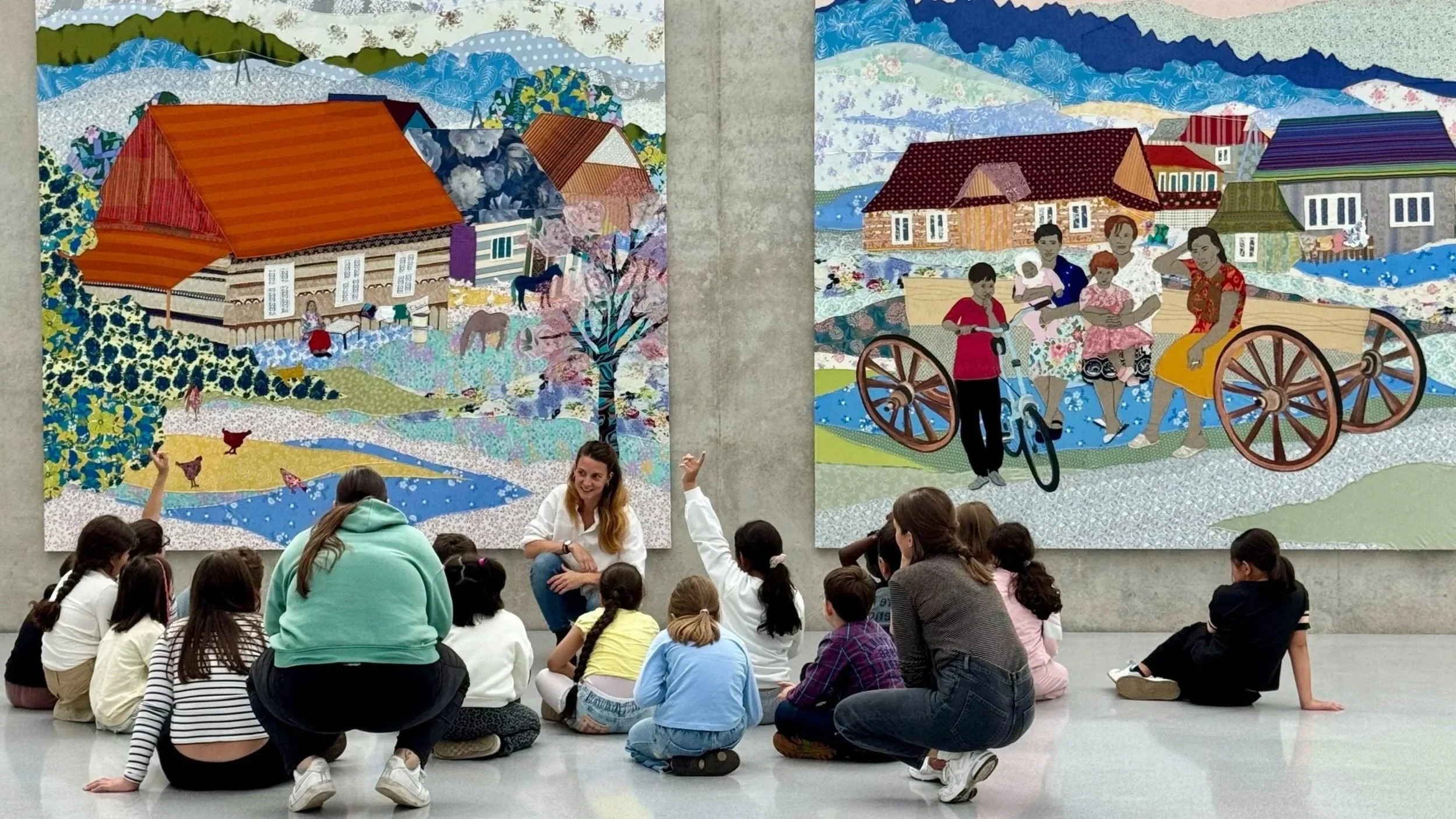
ImageS: Małgorzata Mirga-Tas, Tełe Ćerhenia Jekh Jag,Exhibition at Kunsthaus Bregenz, Austria, 07.06.2025-28.09.2025. Photo by ERCF.
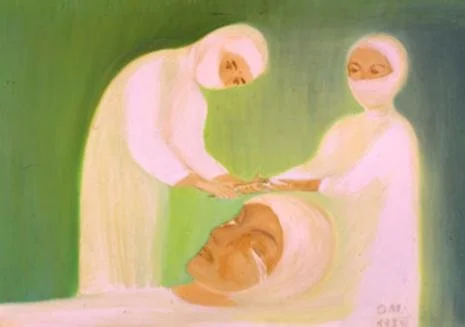
Omara: My Eye Operation, 1989, oil, fiberboard, Collection of Romano Kher.
RomaMoma logo: designed by Timea Junghaus & Solid.
RESOURCES:
Visit our archives:
Gallery8 - Roma Contemporary Art Space worked in the 8th district of Budapest between 2011-2017. All knowledge and images generated there by ERCF is European Creative Commons:
Between 2017-2026 ERCF`s director co-curated RomaMoma:
We aim to build a comprehensive Bibliography for European Roma Cultural History.